


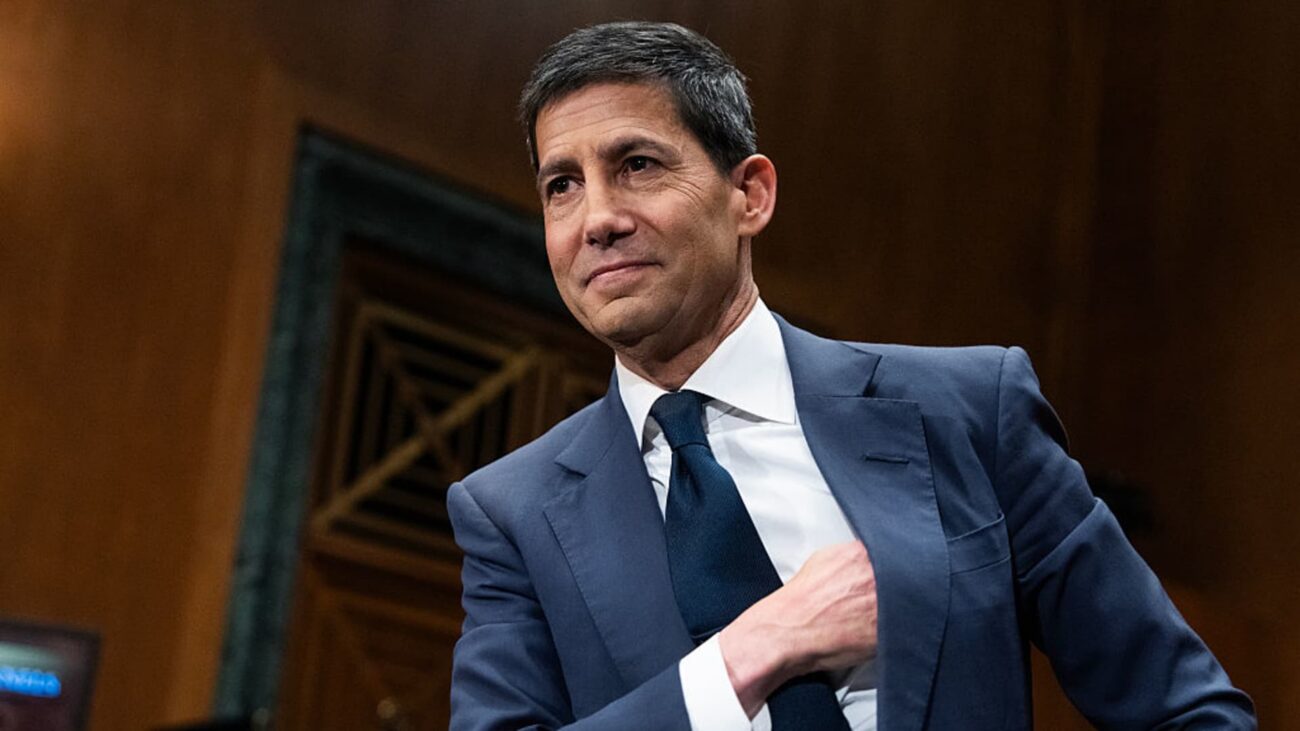
The Federal Reserve meets June 16–17, and for the first time in eight years, Jerome Powell won’t be the one walking to the podium afterward. Kevin Warsh was sworn in as the 17th Fed chair on May 22, and this week’s meeting is his debut, complete with a fresh Summary of Economic Projections, a new dot plot, and his first press conference in the big chair.
If you’re hoping for fireworks on the rate decision itself, lower your expectations now. Fed funds futures are pricing roughly a 98% chance the target range stays parked at 3.50–3.75%. The decision is the least interesting thing happening Wednesday. Everything that matters is in the language, the dots, the dissents, and what Warsh signals about the tools he plans to reach for when the rate lever isn’t one of them.
Let me walk through what’s on the table, and then I’ll tell you what I actually think. Because I think the consensus framing of this meeting is asking the wrong question entirely.
The Setup: Hot Headline, Quiet Core
May CPI printed 4.2% year-over-year, the hottest reading in three years and more than double the Fed’s target. Sounds alarming until you look under the hood. Energy drove over 60% of the monthly increase, with gasoline up roughly 40% from a year ago, a direct consequence of the Iran war and a Strait of Hormuz that remains effectively closed. Core inflation, which strips out food and energy, came in at 2.9%. Elevated, but not screaming.
That gap between headline and core is the single most important data point going into this meeting, and here’s why.
There are two fundamentally different kinds of inflation, and they demand opposite responses. Demand-side inflation is when prices rise because everyone has more money. The money supply expanded, wages are chasing prices, and the whole price level is being bid up by excess liquidity. That’s 2021–2022, when M2 had ballooned roughly 40% in two years. Rate hikes are the right medicine there because the disease is monetary.
Supply-side inflation is something else entirely. Prices go up, but nobody has any additional money. An oil shock doesn’t print dollars. It just forces you to spend more of your existing dollars on gas, leaving less for everything else. Despite the word “inflation,” the effect is actually recessionary. It’s a tax on purchasing power. And the data confirms that’s exactly what we’re living through: real wages have now declined two months in a row. Paychecks are not keeping up. Workers are not bidding prices higher. They’re getting squeezed by them.
Why Hiking Here Would Be a Mistake
So what happens if the Fed hikes into this? Rate hikes don’t reopen the Strait of Hormuz. They don’t pump a single additional barrel of oil. All they do is further constrict access to capital for households and businesses that are already absorbing a purchasing-power hit. You’d be tightening into a tightening, compounding the squeeze without touching its cause.
We have a clean historical case study. In 2011, the ECB under Jean-Claude Trichet hiked twice into an oil price spike with a fragile economy underneath. The Fed, facing the same oil prices, sat still. The eurozone rolled straight into recession. The US didn’t. Same shock, opposite responses, and the scoreboard isn’t ambiguous.
There’s also the lag problem. Monetary policy hits the real economy 12 to 18 months after the decision. Modeling of this specific shock suggests the inflationary impulse largely fades within a few quarters once oil starts flowing again. So a hike decided this summer would land its full restrictive weight on an economy where the shock may have already passed, turning the Fed procyclical at the worst possible moment. Yes, they could cut back down at a later meeting. But rate decisions aren’t light switches. Repriced mortgages, frozen capital expenditure decisions, and tightened credit standards don’t reverse on the FOMC’s calendar. Those ripples are real and they persist.
The honest counterargument, and it’s the one keeping every FOMC member up at night, is the 1970s. Arthur Burns looked at the oil shocks, called them supply-side, accommodated them, and watched a one-time shock metastasize into a wage-price spiral that took Volcker’s 20% rates and back-to-back recessions to kill. The lesson the institution took away: never let expectations de-anchor. And after the “transitory” debacle of 2021, no chair wants to be the one who said “look through it” twice and was wrong twice.
But here’s the test that separates the two scenarios, and it’s the one I’d encourage you to watch instead of headline CPI: is the shock being monetarily validated? In the 1970s, money supply growth was running hot underneath the oil shocks and wages were chasing prices. Today, real wages are falling. There is no spiral forming. Until wages and money supply start validating these prices, this is a relative price shock wearing an inflation costume, and the correct policy response is to look through it.
The Part Nobody Wants to Say Out Loud
Now for my more contrarian view: even if the Fed wanted to run the Volcker playbook, it can’t. This isn’t Volcker’s economy.
When Volcker took rates to 20%, federal debt-to-GDP sat near 30%. Today it’s around 120%, and the constraint that creates isn’t linear. It’s convex. Debt service scales with the level of rates multiplied by the stock of debt, so each successive hike costs the Treasury more than the last. The 2022–2023 cycle took rates from zero to 5.5% and pushed federal interest expense past a trillion dollars a year, killed three banks along the way, and required a quiet emergency facility to keep the rest of the banking system from marking its bond books to market. The system survived it. Barely, and from a starting point of free money.
A second hiking cycle from today’s levels is a different animal. The first 500 basis points came off a floor of zero. There is no equivalent room above 3.75%. Push toward the rates that genuine inflation-fighting credibility would require, and interest expense starts marching toward the largest line item in the federal budget. The Fed’s true ceiling isn’t set by economic theory. It’s set by the Treasury’s income statement. And that ceiling drops a little every year as old low-coupon debt rolls into new issuance.
This is why I find the market’s flirtation with hike odds later this year (futures put modest probability on a quarter-point move by fall) mostly theater. Warsh can talk hawkish. He can shift the statement from an easing bias to neutral, which is exactly what most strategists expect from this meeting. What he cannot do is hold genuinely restrictive rates long enough to matter, because the fiscal math forbids it.
What I’m Actually Watching Wednesday
The statement language matters more than the decision. Watch for the easing bias to disappear and a neutral stance to replace it. Watch the dot plot: coming into this meeting, Goldman doesn’t expect cuts until mid-to-late 2027, and if the dots confirm that, the “higher for longer” repricing has another leg. Watch the dissents, because Warsh inherits a divided committee (the April minutes showed a majority already entertaining the idea that higher rates might be necessary), and the composition of any dissent tells you more about the next twelve months than the vote itself. And watch the press conference for how he handles the political question. Warsh was nominated by a president openly demanding cuts, and his credibility as chair gets defined by how he threads that needle in his first hour at the podium.
But the real tell, the one I’ll be listening for in every answer, is anything touching the plumbing. Balance sheet policy. Bank regulation. Treasury market functioning. The Supplementary Leverage Ratio.
Here’s the endgame as I see it. If the restrictive rate is fiscally unreachable and the deficit still needs financing, accommodation doesn’t come through the funds rate. It comes through the regulatory back door. An SLR exemption lets banks absorb Treasury issuance without it counting against their capital requirements. It’s balance sheet expansion through the private banking system, no QE announcement required. We already saw this exact move deployed in 2020. Warsh has spent years criticizing the Fed’s bloated balance sheet, which makes him precisely the chair who’d prefer accommodation that doesn’t show up on the Fed’s own books.
If that’s the path (hold rates, talk tough, let inflation run above target while nominal GDP outgrows the debt, and quietly grease Treasury absorption through the banks) then what we’re really describing is financial repression. That’s not a doomsday call. It’s how the post-WWII debt was worked down, over about fifteen years of rates held below inflation. Savers paid for it then, and savers in cash will pay for it now.
That’s the lens I’d bring to Wednesday. Not “will they hike or cut,” but “which tools is this Fed positioning to use when the rate tool is off the table.” Hard assets are the historical beneficiaries of exactly this regime, and I’m talking my book here, as a holder of physical gold and silver and someone who trades SLV. Equities broadly tend to do fine in nominal terms too, which is part of why I view both SPY and the metals as different expressions of the same underlying trade: monetary expansion by whatever name the Fed chooses to give it.
The rate decision Wednesday will be a hold. The story is everything else.
This is market commentary and education, not financial advice. I hold positions in physical gold and silver and trade the tickers mentioned. Do your own homework and size your positions like you plan to be wrong.
