


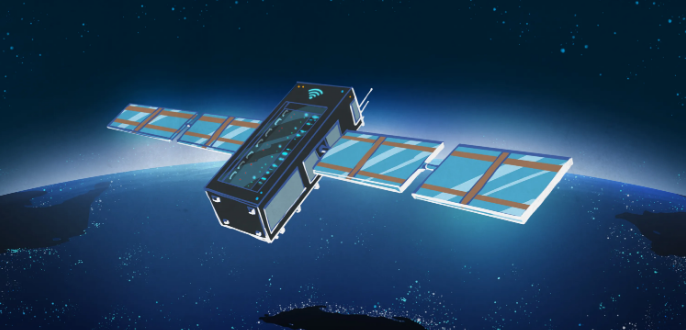
There is a new story making the rounds, and if you have been anywhere near the SpaceX IPO chatter you have already heard some version of it. The pitch goes like this: artificial intelligence needs enormous amounts of compute, Earth is running out of room to build it, so we are going to put the data centers in orbit, or on the moon, and terrestrial infrastructure is on its way to being obsolete. It is a clean narrative, and clean narratives move stocks. The job here is to separate what is actually being built from what is being sold, because the gap between those two things is where the money gets made and lost.
Start with the physics, because the physics is where the first lie lives
The most repeated bull claim is that cooling is free in the vacuum of space. This sounds intuitive and it is wrong. On Earth a data center sheds heat into air and water, using convection and evaporation. Neither of those exists in a vacuum. The only way to get rid of heat in space is to radiate it away as infrared off large panels, and radiative cooling is weak per unit area compared to what we do on the ground. So a space data center does not escape the cooling problem. It trades a water problem for a radiator problem, and the radiator problem is arguably harder, because those panels are mass, and mass is the enemy of everything in orbit.
The water angle is worth sitting with for a second, because it is part of what is driving the whole conversation. Terrestrial data centers draw real community opposition over water and power consumption. That friction is one of the genuine pressures pushing people to look skyward. So the water story is not nothing. It is just that the solution in space is not abundant water, it is giant radiators and a closed coolant loop, which is a different and more expensive animal.
The cost gap is real, large, and only narrows if you believe a stack of ifs
The honest number from the people actually modeling this is that orbital compute runs roughly four times the cost of terrestrial today. The optimistic projection has that compressing toward something like thirty percent more expensive by the early 2030s. Notice that even the bull case never reaches parity. It never gets cheaper than Earth. The best case is somewhat more expensive than Earth, later, if several things break right.
What does all that cost reduction depend on? Essentially one mechanism: launch cost per kilogram falling steeply. Every other piece of the orbital model that sounds insane only becomes rational if launch gets cheap enough to stop caring about waste. And there is a lot of waste baked in, which brings us to the part of the story that gets glossed over hardest.
You do not maintain these things. You replace them.
On Earth, when a server degrades you swap a part and the building stays. The expensive permanent infrastructure persists and you replace the cheap consumable piece. In orbit there is no separation between the two. The chips, the structure, the solar arrays, the radiators, the spacecraft bus all go up together and they all come down together. You cannot send a technician up to swap a board. When something critical fails, you deorbit the whole apparatus and launch a brand new one.
That collapses the entire amortization model that makes terrestrial data centers economical. And it gets worse, because the space environment makes failure more likely, not less. Radiation gradually degrades semiconductors until they stop working, and nobody actually knows the failure rate yet. The first real test of an AI grade chip in orbit only began in late 2025, and it will take years to get results. So the replacement frequency, which multiplies directly against launch cost, is currently an unknown. If the chips last five years the math is tolerable. If radiation kills them in eighteen months the economics fall apart. That is not a detail. That is the whole thesis sitting on a number no one has measured.
The deorbit problem nobody mentions
When one of these units dies you have to bring it down, and a controlled reentry depends on the satellite still having working propulsion and attitude control at end of life. That is never guaranteed. A unit that dies from radiation damage before you can deorbit it does not come down in a tidy burn. It becomes a derelict multi ton object in an increasingly crowded orbit.
The financial risk here is not really the dramatic crash. The hardware was a write off on disposal anyway, since these things are designed to burn up on reentry by intent. The real cost is the slow bleed of the debris environment: higher insurance premiums, more fuel burned on collision avoidance, shorter operational lifetimes, and tightening regulation. Putting heavy, valuable, radiation vulnerable hardware into low Earth orbit at scale is partly a bet that the orbital commons does not degrade faster than the launch cost curve improves. And that variable is not even under any single operator’s control, because it depends on what everyone else launching does too.
The moon version is a different thing entirely, wearing the same costume
Then there is the pitch to put them on the moon instead of in orbit. Here is the tell: the lunar data centers that actually exist are storage vaults, not compute farms. The real company doing this lands a storage payload inside a robotic lander and describes itself as a niche, premium, high security, high latency backup service. It is a vault whose entire value proposition is being remote and hard to reach. That is the opposite of what you want for working AI compute.
And the moon is worse than orbit on nearly every axis that matters for compute. It has roughly two weeks of continuous darkness, which wrecks the free solar pitch. It sits a quarter million miles away, which means a signal round trip of over two seconds, fine for archival backup and useless for anything interactive. You have to survive a landing, which is still unreliable. The thing that makes the moon attractive for a secure vault, its inaccessibility, is exactly what makes it terrible for a data center, because inaccessible means no maintenance, no upgrades, and brutal latency. Any vision of large scale compute on the lunar surface also runs straight into a question the narrative never answers honestly: who builds it? There is no robotic lunar construction at scale and no crew stationed there to do it. The human presence that would require leans on programs that are behind schedule and facing cuts.
How to actually think about this
The useful frame is to stop treating this as one thing and start sorting it into layers.
Layer one is real and shipping now. A single compute satellite in orbit, a storage vault on the moon. These exist. They are tiny and mostly validation exercises, but they are real.
Layer two is plausible and maybe this decade. Modest compute satellites in low Earth orbit for specific workloads, scaling to small constellations. Real engineering with real unknowns, chiefly the radiation lifetime data that will not exist for a few more years. Call it an open research bet.
Layer three is the twenty years or maybe never tier. Gigawatt scale orbital compute rivaling or replacing terrestrial data centers, or large compute facilities built on the lunar surface. This requires launch costs to collapse, radiation to turn out manageable, the debris problem to stay contained, and in the moon case, construction capability that does not exist.
The trick being played in the market is that the thing being sold is layer three, and the evidence being shown is layer one. When a pitch puts a photo of a landed payload next to talk of replacing Earth’s data centers, it is stapling a real photograph to a speculative blueprint. The physics mostly works eventually. The question is always the timeline and the cost, and those are precisely the things the narrative keeps fuzzy, which is usually the tell that the fuzziness is doing the heavy lifting.
The part that matters for your account
If this feels familiar it should, because it rhymes with the early electric vehicle thesis. We make self driving electric cars, and they work, and the logistics and the devil in the details get waved away, and for a long stretch it does not matter to the stock at all. That is the real lesson and it cuts both ways. Being correct that orbital gigawatt compute is fifteen years out and the moon compute pitch is a category error tells you nothing about what the related stocks do next quarter. Narrative priced assets can stay elevated far longer and far higher than the details justify, especially when there is a real scaling business underneath the dream the way Starlink sits under the orbital story. Shorting the gap between sold and real is how a correct thesis turns into a margin call.
So watch the evidence calendar, not the hype calendar. The layer two proof points are what feed or starve this on fundamentals: the orbital chip radiation results coming back over the next couple of years, whether anyone demonstrates orbital compute at meaningful scale with survivable economics. If that evidence comes back bad and the story holds up anyway, that tells you the price has divorced from the proof. If it comes back good, this was never fluff, it was an early stage real thing and the skeptics were early.
The cynicism about narrative inflation timed to a giant capital raise is earned. You do not even need a conspiracy for it. Everyone already holding the asset benefits from the most expansive plausible story being foregrounded right before it gets priced, and that alignment happens almost automatically. Just be careful turning that read into a dated trade, because the tidiest version of the bear case, the one with a clean catalyst on the calendar, is usually the one that runs you over while you are busy being right.
