Updated Monday, July 13, 2026. A developing situation.
What’s happening right now
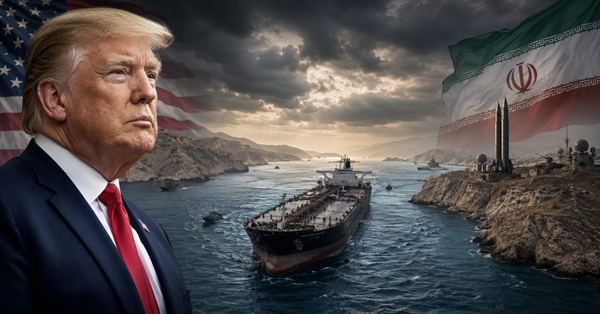
The Strait of Hormuz standoff has sharply re-escalated over the weekend and into Monday morning. The United States and Iran are exchanging repeated waves of strikes and issuing flatly contradictory declarations about the status of the world’s most important oil chokepoint.
Over the weekend the U.S. military launched successive rounds of airstrikes against Iran. It reportedly hit roughly 140 Iranian military sites in an overnight assault from Saturday into Sunday, followed by further strikes beginning Sunday evening (U.S. Eastern time), and then additional waves overnight into Monday. Washington has framed the campaign as an effort to degrade Iran’s ability to strike civilian vessels transiting the strait. By Monday, U.S. officials described a fourth wave of strikes hitting “dozens” of additional targets and said American forces used one-way attack drones at sea for the first time.
Iran’s Islamic Revolutionary Guard Corps (IRGC) has retaliated with drones and missiles aimed at U.S. bases and U.S.-linked sites across the Gulf, reportedly targeting locations in Kuwait, Bahrain, Jordan, Oman, and Qatar. U.S. aircraft say they shot down at least one Iranian cruise missile and an attack drone. The IRGC has again fired on commercial shipping in the strait.
The core dispute: open or closed?
At the center of the crisis is a factual standoff. The IRGC has declared the Strait of Hormuz closed, saying it fired a warning shot at a vessel attempting an unauthorized crossing and that the strait will remain closed “until further notice and until regional interference by the US ceases.” Iranian officials say passage is “not possible.”
Washington disputes this. U.S. Central Command insists commercial transits are continuing, saying more than 800 vessels and 400 million barrels of crude have moved through the waterway since May, including more than 140 ships in the past week. The U.S. has publicly demanded that Iran state the strait is open to all shipping.
The reality on the water appears to be somewhere in between. It is a strait that is neither fully open nor fully sealed, with a trickle of traffic moving under extreme risk. Ship-tracking figures cited over the weekend showed transits collapsing to a small fraction of normal volumes. One intelligence firm counted about 21 commercial transits on July 11 and roughly 34 in a subsequent count, against a normal baseline that ran anywhere from around 88 to 140 vessels per day before the wider war.
Oil markets
Energy markets jumped on the renewed fighting. Brent crude, the benchmark for the majority of the world’s seaborne oil, rose roughly 4% Monday to trade above $79 a barrel, after climbing again Sunday. Analysts including Goldman Sachs warned that continued escalation keeps meaningful upside risk on prices, given how much supply flows through the chokepoint.
For context on scale: the Strait of Hormuz normally carries around a fifth of global oil consumption, on the order of 13 million barrels per day, plus a large share of the world’s liquefied natural gas (LNG). Earlier in this crisis, Brent surpassed $100 for the first time in four years and peaked near $126 a barrel, marking the largest disruption to world energy supply since the 1970s. Monday’s roughly $79 level remains well below that spring peak, but it is highly volatile and moving intraday on each new headline.
How we got here
This weekend’s flare-up is the latest chapter in a crisis that has simmered and spiked since late February 2026:
- Late February 2026: The U.S. and Israel launched an air war against Iran, and Iran’s supreme leader Ali Khamenei was killed. In retaliation, Iran attacked Israel, U.S. bases, and Gulf states, and the IRGC began forbidding passage through the strait, attacking merchant ships, and laying naval mines.
- March 2026: Traffic through the strait collapsed. The IRGC claimed control of the waterway. Brent spiked above $100 and peaked near $126, the largest monthly oil-price increase on record. Dozens of ships were damaged, seafarers were killed, and tens of thousands of mariners and thousands of ships were stranded in the Gulf.
- April 2026: A temporary ceasefire briefly took hold, but Iran began controlling traffic and charging tolls reportedly exceeding $1 million per ship. After talks failed, the U.S. imposed a naval blockade of Iranian ports on April 13, creating what observers called a “dual blockade.”
- Early July 2026: Fresh attacks hit shipping, including reported strikes on tankers such as the Qatari-owned LNG carrier Al Rekayat and a Saudi-flagged supertanker, plus a Cyprus-flagged container ship, reigniting direct U.S.–Iran exchanges.
- July 11–13, 2026: The current escalation, described above.
Cumulatively over the crisis, reporting indicates at least 17 merchant ships damaged (several abandoned), two captured, and roughly a dozen seafarers killed or missing, alongside stranded tankers and disrupted cruise traffic.
Diplomacy
Diplomatic channels remain active but strained. Iran’s Foreign Minister Abbas Araghchi has held talks with his Omani counterpart focused on the safety and freedom of navigation in the strait, with Oman continuing its role as an intermediary. As of Monday morning there was no announced ceasefire or de-escalation framework, and both sides were still trading strikes.
What to watch next
- Whether the tit-for-tat strikes broaden into sustained direct conflict or move toward a ceasefire.
- Independent ship-tracking data on actual transit volumes, versus competing U.S. and Iranian claims.
- Oil and LNG price moves, and any coordinated response from producers or strategic reserves.
- Attacks on Gulf-state territory (Kuwait, Bahrain, Qatar, Oman, Jordan, UAE), which risk drawing additional parties into the conflict.
- Any statements from China and India, both major buyers of Gulf and Iranian oil, and from Oman as mediator.